The Early Dominance of the Sima Rule and the Fractured Freedom Mind of Aristocracy Intellectuals
POLITICAL FORMATION OF WEI-JIN AND SOUTHERN DYNASTIESKCL
Jiahao Shen
2/1/20267 min read
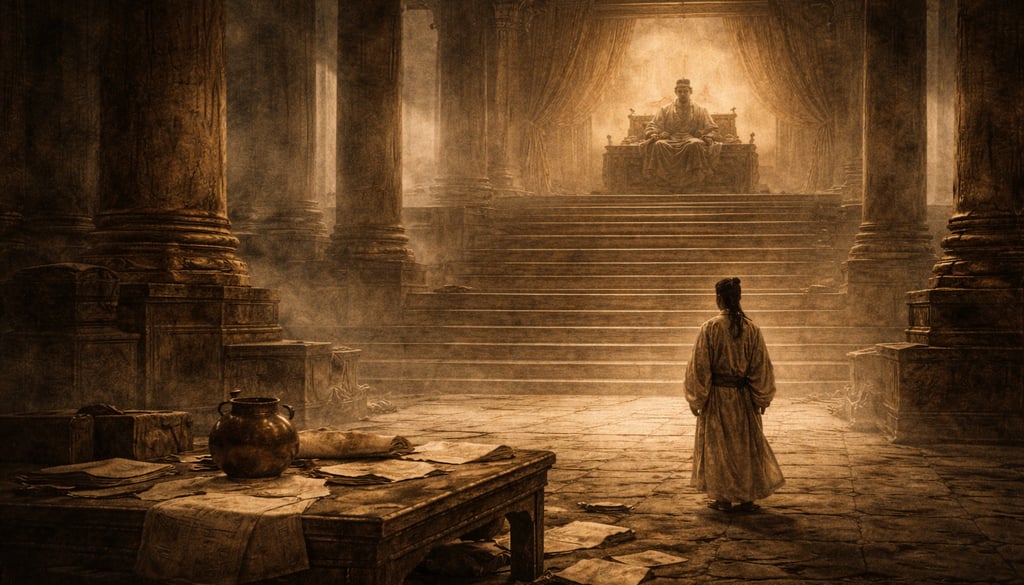
The dominance of power from the Sima family at the late Cao-Wei period, under represents the significant transitional landmark in the historical context of the early Medieval China.
In the short term, the abrupt imposition of the harsh political oppression inflicted the severe pains onto the aristocracy intellectuals, from which the group the distinctive identity and cultural and spiritual values had been undergoing the solidifying process consolidation with their increasingly strengthened independent status after the collapse of Han period.
But in the long term, the period of Sima rule, particularly at its early phase that before the catastrophic collapse of the central authority, was characterized by the continuous and increasingly powerful consolidation of the aristocracy status. However, philosophically and spiritually, such consolidation came with the intolerable price on the serious lost of the true and core intellectual mind and spiritual values of the aristocracy intellectuals, particularly on their genuine understanding and sensation of the idealist and metaphysical freedom.
The original making of the aristocracy status of the Sima family generally the same essential pattern as the formation of aristocracy class under the long Han period. With the possible early military background, the Sima family gradually transformed to be the clan that centered on the Confucian scholar and intellectual traditions and sustained the regular presence on the political positions. The Confucian intellectualization and political centralized integration are the two most crucial element in the original formation of the systematic Han aristocracy class structure. Before the mid-late Cao-Wei period, the Sima clan never attained the uppermost elite status, but it did establish and secure the stable and influential status as the local powerful aristocracy group.
The Sima family, most notably represented by the Sima Yi at the mid-late Cao-Wei period, further advanced to be the highest centrally positioned aristocracy status that critically supported by the significant political promotion and trust entitled him to become the key figure in the central politics and simultaneously the formation and cultivation of the new extensive aristocratic connections and networks. The decisive breakthrough toward the complete dominance of political authority occurred through the successful premeditated political coup against the political rival that appointed from the imperial clan under the reigning period of child emperor, when the actual and direct political ruling at least temporarily transferred to the powerful aristocracy politicians with the absent from in-effect imperial authority.
The complete elimination of the political rival and his close affiliated groups through the exceptionally brutal means, thereby violating the initial promise of the restrained and peaceful political transition and betraying the trusts from other influential aristocracy figures that participated into the actions, enabled the Sima family become the sole effective political ruler of the central politics, and meanwhile foreshadowed the emergence of regime with the intensified oppressive political environment.
It was evident that despite with the certain tendency to the Confucian conservatism, Sima rule did not have intention to fundamentally reconstruct the established aristocracy structure, which the group already preserved the huge potentials for the further continuous philosophical and intellectual evolution with the empowerment of the emerging framework of the systematic formation of the metaphysical philosophical order that would come to ultimately define and shape the cultural and spiritual identity of the aristocracy intellectuals. However, the severely more strict and oppressed political controls were imposed to ensure the safety and stability of the nascent ruling regime, which had to confront the recurrent resentments and rebellious minds and actions toward the unjustified gaining of power, as well as the continuously existing sympathies toward the Cao-Wei imperial clan despite its complete loss of the effective political authority and power.
The aristocracy intellectuals had begun to significantly develop the distinctive cultural and intellectual identity at the late Han period as the painful yet profoundly spiritual response to the external severe oppressions arising from the deeply corrupted central politics that particularly inflicted onto the group of aristocracy intellectuals who firmly and constantly committed to the Confucian idealist principles and practices. The subsequent and complete collapse of the Han empire further reinforced their independent aristocracy status, and in parallel, deepened their exclusive intellectual and philosophical conceptualization of the distinctive and exclusive idealist values and intellectual minds.
Symbolically, the development of the philosophical system essentially articulated ultimate metaphysical natural order that understood as the universal and sole metaphysical natural order ultimately predetermines the logic and function of all the tangible realities and accordingly that ultimate order fundamentally demands the state of constant and authentic tranquility and immutability. The philosophical conceptualization of the metaphysical ultimate natural order was meant to be translated into the ideological framework for building and defining the relation between the aristocracy class and central imperial authority that structured in the format of predetermined restricted practical engagements and interactions, and intended for the obligation and preservation of the true ultimate nature order and value that the idealist aristocracy intellectuals faithfully embraced and internalized.
When the incoming Sima rule that initially established under the condition of unjustified political legitimacy, it deliberately constructed the political environment of high pressure and oppression that enforced the clear and collective recognition and acceptance of the new political reality and power structure from the aristocracy group as whole, which the political submission inevitably stood as the betrayal of the idealist mind, which was essentially defined and constructed by the distinctive and exclusive aristocracy intellectual identity that had started to be philosophically systematized through the metaphysical conceptualization of the ultimate natural order.
The critical and intense philosophical and mindful resistance and denial that accompanied with the considerable internal pains during the initial and early phase of the Sima rule, is destined to be proved to be ultimate tragedy but with the everlasting intellectual and idealist legacy.
The fraction of aristocracy intellectuals and officials who chose active compromises and collaborations with the Sima ruling system was extremely disdained and denied with any genuine moral value, so as the Confucian values and practices as whole that had been institutionalized into the operation and functioning the political system.
Such radicalness that rooted in the pure internal idealism with the intense internal sufferings was clearly intolerable to the Sima ruling system particularly during its early transitional stage of power consolidation. The pure idealist aristocracy intellectuals either perished with the incurable internal pains that caused by the complete incompatibility between the internal moral world and external political reality, maintaining the political silence and conceding only the reluctant and minimal compromise to the political system, or faced the public execution after preserving the complete uncompromising idealist mind and maintaining the openly and unequivocally denouncing and defiant stance toward the ruling system and the hypocritical Confucian values it represented.
The highly oppressive political environment under the Sima rule was reasonably short-lived as it primarily served for the purpose for consolidating power amid the initial deficit of political legitimacy. The essential nature of the political ruling was continuously on reliant of the integration of the aristocracy structure, which the advanced process of centralization integration further reinforced their highly independent status and identity alongside with the consolidation of the power centralization.
Within the enthronement of the Sima ruler and the subsequent unification of China, the intellectual and philosophical mind of the aristocracy group accordingly transformed into the coherent philosophical and ideological system oriented toward the complete unification of the internal and external world. At the core premise of the idea stated that each autonomous living substance constituted their own complete independent world that inherently and wholly operated on the root of ultimate principle and thus fully realizing and embracing the full freedom within their respective predetermined nature. The boundary between the internal and external world was thus logically dissolved, as the both worlds were essentially understood to be belonged to the single unified world that governed by the universalized ultimate principle.
However, the authentic philosophical unity between the aristocratic philosophical and intellectual mind and the external political reality was actually failed to be achieved under the early unified Sima imperial ruling. The mind of freedom that ideally meant to be the exclusive and ultimate expression of the aristocracy intellectual class, massively lost its true meanings and to be sadly reduced and degenerated to be the rhetorical judgment for the extreme luxury and indulgence that devoid of any meaningful search for the philosophical spirit of freedom and the internal idealized world essentially behind, as well as the deep philosophical and mindful reflection on the possible resistance and withdrawal from the external system that as the necessary condition for the preservation of the true inner world.
Moreover, the huge political and military empowerment of the imperial clans, and combined with the ill-judged choice of the imperial successor and the central political figures, rapidly plunged the unified state into the severe internal disorders. As these crises intersected with the sustained engagements of the nomadic powers that had undergone partial yet significant cultural homogenization, the internal political and military struggles were escalated into the complete collapse of central political authority. And such totally collapsed situation became the enduring phenomenon of the Northern China that marked by the fundamental long-term political and societal incapability of the power reconstruction and reconsolidation amid the continued presence of multiple extremely ruthless nomadic powers that themselves were also undergoing gradual and critical transitional phase.
The political structure of the Sima imperial ruling did not inherently necessitate its disastrous consequence of total long-term collapse, assuming the more sophisticated balanced power configurations and relations among the imperial clans, non-imperial aristocracy groups and imperial rulers themselves. However, it is significantly evident that the true mind of freedom could not be continued and sustained in the course of the consolidation of the aristocracy structure as the essential component of the power centralization process of the imperial authority.
The authentic spirit of freedom itself might have been the accidentally luminous phenomenon, one that could only be provoked specifically under the exceptional condition of the transitional phase of the oppressive Sima rule. The immense internal pains generated by the external oppressions, to the certain extent, stands as the essential premise for the formation of the true inner idealized world that grounded in the deep philosophical understanding and conceptualization of the freedom mind, and it is ultimately destined to be completely detached from the external reality.
The long-term trajectory of the philosophical construction of the aristocracy intellectual mind and thought that from the ultimate natural order as the universal oneness to the individual independent world with the universal principle rooted inside and with the complete unity of internal and external sphere, indeed constituted the fundamental structure for the formation and culmination of the true freedom mind and spirit. But the philosophical framework along proved itself insufficient and cannot guarantee such authentic internal freedom. And tragically, the philosophical system that created and established exclusively through the consolidation process of aristocracy status and identity was overwhelmingly eclipsed by the tendency toward self-indulgence and spiritual corruption that enacted under the name and through the abuse of the freedom mind itself.
Within the historical context of the Medieval Chinese aristocracy structure, the period of early Sima de-facto ruling might represent the only circumstance under which the authentic mind and spirit of freedom with its inner idealized world could emerge and flourish briefly, and precisely through the intense confrontation to the externally imposed pervasive oppression, yet this emergence was inherently bound to the tragedy that marked by the deep and irresolvable internalized pains and by its essential irreplicability.
*** This essay is written for Postgraduate program of World History and Philosophy at King's College London, and it is part of series on Political Formation of Wei-Jin and Southern Dynasties that under the Medieval China series.